

We invite you to read an article by PhD. Karolina Brylska, PhD. Tomasz Gackowski, MA Mateusz Patery - employees of the Laboratory of Media Studies of the University of Warsaw, which appeared in the monograph "The magnitude or authority of John Paul II in media coverage during his canonization" edited by Prof. Jerzy Olędzki and Prof. Teresa Sasińska-Klas.
Laboratory of Media Studies
We invite you to get familiar with the summary of the study of the Laboratory of Media Studies of the University of Warsaw, which dealt with the Polynomial of the Poles about the conflict in Ukraine. The message pt. "What Poles think of the conflict in Ukraine?" Is the first result of the survey. The next, already announced effect, will be a broad report - supplemented by About the demographic context. Its publication is planned for September this year.
Please read and encourage us to share.
/ Part of the summary /
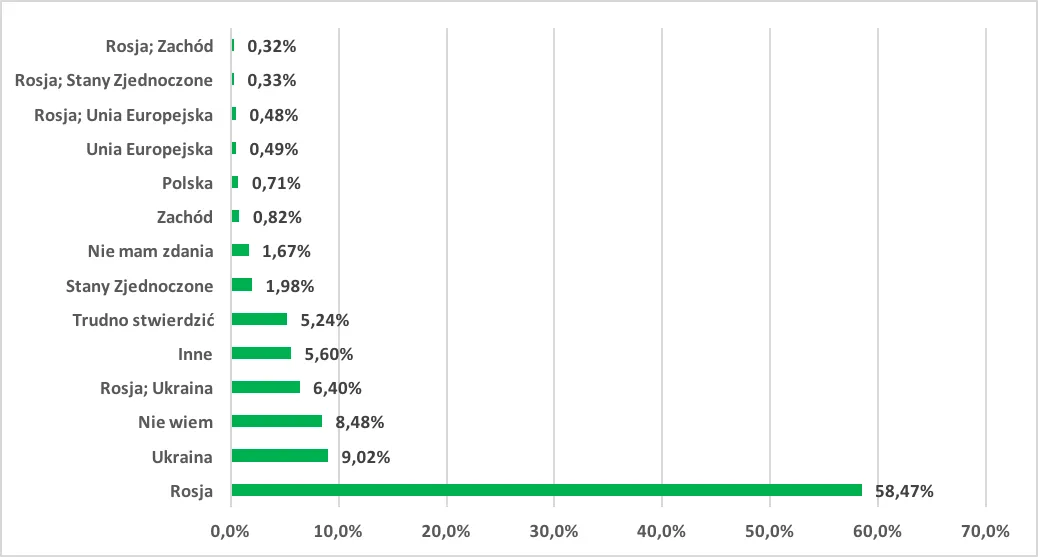
"Only a little over 9% of Poles think that Ukraine is the only one responsible for the conflict, while 66% of respondents say that Russia is responsible (58.47%) and co-responsible (7.53%). 6 per 100 respondents consider that both states - Russia and Ukraine - are responsible for the conflict. In the category "Other" there are answers such as "Millionaires", "Macierewicz", "Masonic Lodge", "Economy"."

The sixth edition of methodological workshops of media studies researchers will take place on 17 November at the University of Warsaw. The organizers have been able to invite three highly valued experts to conduct them.
Workshop the eye-tracking analysis will be prepared by PhD. Izabela Krejtz from the Interdisciplinary Center for Applied Cognitive Studies, co-founder of the Center for Eye-tracking Research at the University of SWPS. Ethnography will train PhD. Anna Malewska-Shalygin - Director of the Institute of Ethnology and Cultural Anthropology at the University of Warsaw. The third section - Pragmatic and Semantic Analysis - will lead by Prof. Dobrosława Wężowicz-Ziółkowska from the Institute of Culture and Interdisciplinary Studies of the University of Silesia.
The number of seats in each of the three sections of the workshop is limited - participation is determined by the order of entries!!
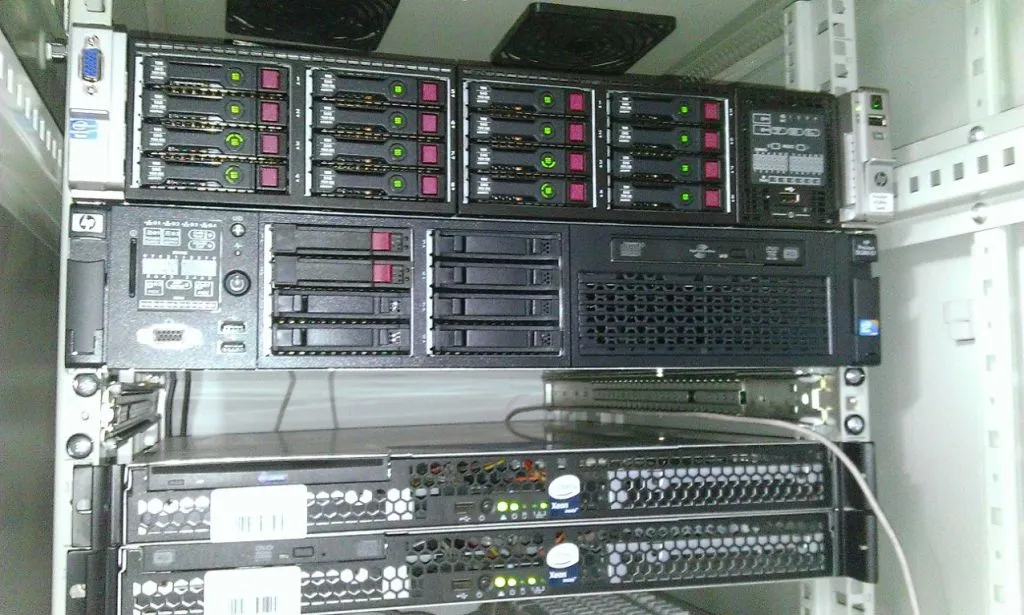
Technology and equipment provide about the functionality of Laboratory of Media Studies: 2x8-core server processors, ultra-fast internet access, several radio and television channels real time recorder, specialised software, but above all the most modern eyetracker - device to test eyeballs movements.
I. Server – HP DL380p gen8
- 2x8-core server processors Intel Xeon;
- 96 GB RAM;
- 13,2 TB internal storage;
- two power supplies;
- UPS;
- server hosts internet portals;
- access to multimedia resources and research materials for scientists;
- surveys platform;
- big database able to store : 10k hours of record videocontent, 350k text publications, 32k hours of audiocontent, 116k FullHD photos.
II. Eye Tracker and Mobile Device
- Eye Tracker X2 TOBII 60 – the most modern eye tracker, TOBII Studio 3.4.3 software and superfast ASUS laptop;
- Mobile Device – special arm to mobile device applications usability test;
- the newest solution to test eyeballs movements during use of media - text, tv advertaisment, movie, poster, website, application and more;
- allow to carry out research, eg. types of medium usage quality, in effect reccomend their optimalized - usabiliy tests;
- comprehensive usability tests of mobile phones and tablets;
- small size of the equipment allows to use if outside the laboratory, eg. in a more natural environment for the test.
III. Web crawling
- proprietary solution in the field of content analysis of websites and social media;
- the ability to automate process research;
- precis types of content identifacation;
- two web crawling powerful computers;
- full automatic of data aggregation;
- semi-automatic coding;
- extensive analysis;
- virtual ethnography - cultural network - web 2.0 and 3.0).
IV.TV and radio monitoring
- several radio and television channels real time recorder – supported by Stirlitz Media Software;
- the number of channels can be extended with the technological and personal development of Laboratory of Media Studies;
- database allows to make dedicated archives containing materials with specific events and carrying them for further analysis;
- access to materials for research purposes from both - presence in the laboratory and remotely
- easily build a remote research groups, eg. research gruop work from home;
- thematic, problem, incidental and continuous monitoring;
- quality coding in research teams and semi-automatic language recoding - quantitative transcription, automatic and semi-automatic transcription;
- automatic image recognition - in process.
V. CATI, CAWI, CASI
- CATI studio - able to use as part of CASI - computer assisted self interviews;
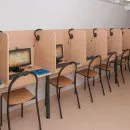
- 15 complete computer desks;
- low energy and mini computers - one desktop takes only less than 42W power;
- very quiet work of computer to make telephone surveys more effective;
- all computers run on Microsoft Windows 10;
- random digital-dialing software to computer assisted telephone interviews;
- CATI studio can be used to experimental tests requiring computer support;
VI. FGI studio
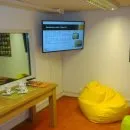
- 50" interactive, the newest TV with Blue-ray player and HD camera make possible to perform multimedial shows in 2D and 3D technologies.
- specially arranged studio (equipped with Venetian glass and several colorful poof) create an intimate, unique atmosphere for respondents;
- possibility of carrty out ProfFGI (with experts, specialists);
- studio can be used as a training room;
- studio enable to make pre-release screening of a film analysis with record of brainstorm after show.
VII. Projection room
- 50" interactive, the newest TV with Blue-ray player and HD camera make possible to perform multimedial shows in 2D and 3D technologies;
- home theater system;
- hybrid TV technology cooperating with wiraless solutions and streaming systems;
- room enable to do advertisment tests - also using Eye Tracker X2 TOBII 60;
- tests videocontent published on eg. YouTube, Vimeo
- tests SD vs. HD and 3D;
- visual preparing to FGI;
- possibility of carry out advanced training and expert workshops.
VIII. Techologies - full compatiblity
- Laboratory of Media Studies is full of advanced technologies, which are compabile with each other;
- the most important in compatibility is super fast cable and wiraless internet access;
- all the computers work on the basis of processors Intel Haswell and Ivy Bridge;
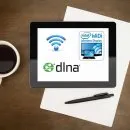
- easy share functions by using wiraless technologies eg. DLNA, Intel WiDi, Bluetooth;
- TV and monitor displays on the basis of LED technology - very good quality and low energy consumption;
- Laboratory of Media Studies is possible to design and perform a specific research project (due to the given problem), but also to organize and carry out the process of implementing changes and recommendations.
IX. The newest software
- LBM has programs useful during research activities and further processing and publication;
- Adobe CS6 - set of different Adobe application for designing, animation and other multimedia activities;
- Camtasia Studio 8's TechSmith - advanced software to create video instruction and training materials;
- Microsoft Office 2013 allow to make all office operations, further enhanced by group work together on common documents and storage resources in the "cloud";
- if it is possible Laboratory of Media Studies use open-source software, cuurently has:
- – Debian Linux Server on the main server of Laboratory of Media Studies;
- – Office suite LibreOffice as a complement to Microsoft Office 2013 in the range of accurate and full service open formats of electronic documents.
X. Books and newspapers monitoring
- Polish researchers could instantly browse newspapers and books from the period in terms of their interest phrases, contexts, statements, descriptions. Ultimately Laborratory of Media Studies also would create a library of the most important positions, including foreign languages.
XI. Databeses




Page 60 of 61